



"Jianshang" - a revelation of the Xia, Shang, and Zhou dynasties.
Start your reading of Chinese history with this book!
Preface by Xu Hong; Unanimously Recommended by Luo Xin + Xu Jilin + Liu Suri + Yang Bin
Xu Hong: “It's a book that you can't put down when you read it, and in the end, I'm going to use the word ‘shocking” to describe my feelings and emotions."
★ Boundaries: start your reading of Chinese history with this book!
This book is a landmark in that the author has climbed to the top of the field of study and will be an indispensable piece of research and writing of its kind.
At the same time, it sets up a starting point: any researcher or general reader interested in classical Chinese thought, beliefs, ethics, and customs, as well as politics and institutions, can begin your exploration with this book.
It is also the culmination of decades of social acceptance and wealth accumulation, giving us a glimpse of how we, as a group of people, came to be as we are, and how we are still today, before we once again enter the dark corridors of history. It will give us encouragement to recognize ourselves and face the future.
--Liu Suri Founder of Wansheng Book Garden
★ Mathematician's logic, literary man's imagination
A good one.historyThe work requires not only the logic of a mathematician but also the imagination of a literary scholar. From this point of view, Li Shuo's Jian Shang is grand in its grandeur and solid in its subtleties: it details the emergence and disappearance of human sacrifice in early Chinese civilization, and why “King Wu's victory over the Shang” was not just a simple regime change, but a milestone revolution in the history of the formation of Chinese civilization.
Therefore, I would like to summarize Li Shuo's insights with “the transformation of the Shang and Zhou dynasties”: for Chinese civilization, this transformation has a deeper and farther significance than the transformation of the Tang and Song dynasties two thousand years later!
--Yang Bin, Professor, Department of History, University of Macau, member of the Xiling Seal Society, author of Sea Shells and Shell Coins: A Little-Known History of the World
★ Using archaeological results to read esoteric documents and reconstructing the historical perception of King Wu's campaign against the Zhou Dynasty
In the traditional narratives of ancient history, the face of the Shang-Zhou-Yi dynasty is obscure. We know little about the details behind it. What were the manifestations of King Zhou's “lawlessness”? What was the aristocratic life of the Shang royal family like? Who were the Shang people? What were the secrets of their daily life and rituals? This book utilizes the results of a large number of modern archaeological excavations, corresponds to oracle bone inscriptions and the trigrams of the I Ching, reinterprets the puzzling words, and unveils for the reader an important page in the ancient history of China.
After Wang Guowei, the importance of the Shang and Zhou revolutions in Chinese history has been deeply rooted in the minds of the people; and Li Shuo has depicted this importance, graphically and vividly.
--Luoxin, Professor, Department of History, Peking University
★ Recreate the great transition from companionship to separation between human sacrifice and early Chinese civilization
The first dynasty, the Xia Dynasty (Erlitou), followed the custom of killing and sacrificing people that had existed since the Neolithic Age and culminated in the Shang Dynasty. King Wen of Zhou was detained as a human sacrifice in Yindu under the suspicion of King Zhou of Shang, and his eldest son, Boyikao, was also sacrificed by King Zhou. Thereafter, King Wen developed the hexagram and line system of the I Ching, and recorded many events that King Wen experienced and recognized, with the ultimate goal of projecting a strategy to “Jian Shang”.
After King Wu destroyed the Shang, he imitated the human sacrifices of the merchants; after his death, the Duke of Zhou came to power, completely banned the religion of human sacrifices, destroyed the documentary records of human sacrifices of the Shang, and created an idealized historical narrative without human sacrifices, as well as a secular political and moral system based on “virtue”.
The major events of the state are in the rituals and the military. Beginning with human sacrifice, this book tells why sacrifice and warfare were so closely linked in the Shang dynasty, and how the Yin-Zhou change occurred.
--Prof. Xu Jilin, East China Normal University, Department of History
★ Discover the humanistic spirit of the ancient times and recall the enlightenment of Chinese civilization.
Going back to the origins, the Shang and Zhou Yi dynasties were the starting point for the rebirth of China. It was not a simple change of dynasties. The civilization of rituals and music initiated by the Zhou Dynasty replaced the ghostly culture of the Shang Dynasty; the humanism of the Duke of Zhou and Confucius overcame the “religious mysticism” of King Wu Ding and King Zhou, laying the cornerstone of the Chinese faith.
★ Young historian and author of The Civil War in 300 Years, Suk Lee's weighty new book
Li Shuo is the author of "Three Hundred Years of the Civil War", "The Great History of Confucius" and other influential historical works; this book goes deep into the ancient history, with vivid narratives, exploring in-depth the ethnic origins, beliefs and customs, wars and military and daily life of the merchants and the Zhou people, transforming the old piles of paper and the ruins into vivid plot stories, and empowering mythological characters (Jiang Taigong, King Wen of Zhou, King Zhou of Shang) with historical materials to give flesh and blood to their stories. ......) with flesh and blood.
[Synopsis]
“This is the first book in the ”Li Shuo History of China", and it is the first book in the history of China!
This book focuses on the emergence and transformation of Chinese civilization. It spans more than a thousand years from the emergence of the Xia Dynasty (Erlitou Culture) four thousand years ago to the fall of the Shang Dynasty and the establishment of the Western Zhou three thousand years ago.
Since the Neolithic period, a primitive religion of killing and sacrifice has developed in northern China. The first dynasty, the Xia (Erlitou), also inherited this culture of human sacrifice, which culminated in the subsequent Shang dynasty. The Zhou tribe, secluded in the west, did not have a tradition of human sacrifice, but they had defected to the Shang Dynasty, for whom they hunted Qiang people for sacrifice. King Wen of Zhou was suspected by King Zhou of Shang and was detained as a human sacrifice in Yindu, and eventually, King Wen's eldest son, Boyikao, was sacrificed by King Zhou. King Wen learned the I-gua divination techniques of the merchants and developed the trigram and line system of the I Ching - a record of the many events that King Wen experienced and recognized, with the ultimate goal of projecting a strategy to “Jian Shang”.
After King Wu destroyed the Shang, he imitated the human sacrifices of the merchants; after his death, the Duke of Zhou came to power, completely banned the religion of human sacrifices, destroyed the documentary records of human sacrifices of the Shang, and created an idealized historical narrative without human sacrifices, as well as a secular political and moral system based on “virtue”.
These initiatives of the Duke of Zhou ushered in a new Chinese civilization. Five hundred years later, Confucius edited the “Six Classics” of Confucianism to systematize the theoretical achievements of the Duke of Zhou. The Duke of Zhou and Confucius shaped the school of Confucianism, and its influence has lasted until modern times.
In a nutshell, with the help of archaeological materials and heirloom documents, this book has sorted out the whole process of the emergence, prosperity and demise of the ancient custom of human sacrifice, as well as the great turnaround of the human sacrifice and the early civilization of Huaxia from accompaniment to separation, and it has reproduced the great efforts made by the ancients (the Zhou people) for the termination of the Shang Dynasty and the custom of human sacrifice, so that we have a brand-new cognition of the origins of the civilization of Huaxia.
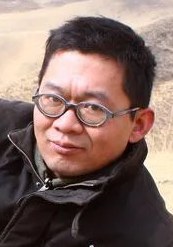
李硕
Young historian, graduated from the Chinese Department of Peking University (B.A.) and the Department of History of Tsinghua University (M.A. and Ph.D.), engaged in the research of ancient Chinese history and historical geography.
He is the author of "Three Hundred Years of Civil War", "The Great History of Confucius", "Liu Yunu: A History of the Opening Battle of the North and South Dynasties", etc. He has published a number of academic papers in "Academic Monthly", "Historical Geography", "Dunhuang Studies" and other publications.
