



When We Don't Understand the World Anymore - a book by young Chilean author Rabatut.
When We Cease to Understand the World
★2011 International Booker Prize and National Book Award shortlisted work!
★ Selected as one of the New York Times Book Review Weekly's Ten Best Books of the year for the year 2001!
★ Selected for Obama's 2012 Summer Reading List!
★ Recommended by The New Yorker, The Wall Street Journal, Publishers Weekly, The Guardian, and more!
★ Where exactly is the line between science and morality, between genius and madness?
★ Breaking down the boundaries between truth and fiction to create a psychedelic and chilling narrative style.
◆ I am in agony and feel helpless, watching my sense of time, my firm resolve, my sense of responsibility and proportion being destroyed all together! To whom can this wonderful hell be attributed but to you? Please tell me, when did all this madness begin? When did we stop understanding the world?
--When We Stop Understanding the World
◆Content profile:
The masterpiece of contemporary Chilean author Benjamín Rabatut is a collection of five short stories based on real people, in which the text blurs the boundaries between history, memoir, essay, and fiction to create a unique narrative style. The book mainly tells how a large number of scientific giants, such as Fritz Haber, the inventor of “gas warfare”, Carl Schwassi, the proposer of “black hole theory”, Erwin Schrödinger, who had tuberculosis, and Werner Heisenberg, a genius physicist, contributed to mankind like Prometheus. Prometheus, and how a number of scientific giants such as Erwin Schrödinger, who had tuberculosis, and Werner Heisenberg, a genius physicist, were like Prometheus in their quest for fire.
◆Media Recommendation:
Rabatut casts the light of the Gothic novel on twentieth-century science in five free-flowing vignettes about the bloodlines of knowledge and destruction, glory and madness ......
--The New York Times Book Review Weekly
This book has a familial relationship with the work of Winfried Sebald or Olga Tolkachuk: a series of narratives that distort biography but also venture into the realm of the imagination. The stories in this book are nested within each other, and their points of contact with reality are almost impossible to pin down completely.
--The New Yorker
Dark and dazzling! Rabatut demonstrates the unbreakable link between horror and beauty, life-saving and life-destroying. This book - as erudite and unforgettable as it is - stubbornly insists on linking the wonders of scientific progress to the atrocities of history.
--Wall Street Journal
Rabatut offers a trim, heretical, and thoroughly engaging account of the individuality and wild creativity that sparked some of the greatest scientific discoveries of the twentieth century. The theme of the work is the full dynamism of human exploration and the dangers involved.
--Publishers Weekly
Rabatut wrote an anti-utopian nonfictionnovel, the context is not the future, but the present.
--The Guardian
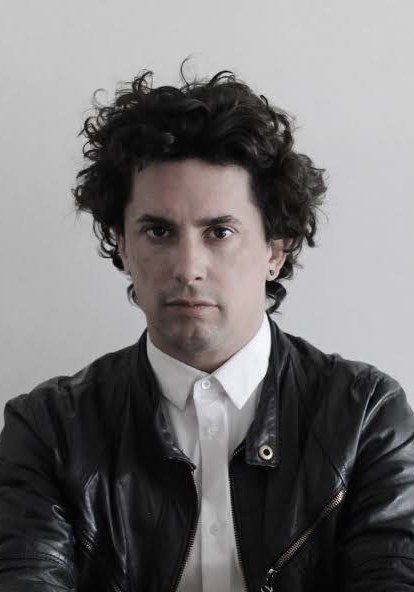
Benjamin Rabatut
Benjamín Labatut
Benjamin Rabatou was born in Rotterdam in 1980. He has lived in several cities, including The Hague, Buenos Aires and Lima; when he was 14 he moved to Santiago de Chile. He studied journalism at the Catholic University of Chile (Spanish: Pontificia Universidad Católica de Chile).
Labatut's first book of stories, La Antártica empieza aquí, won the 2009 Premio Caza de Letras awarded by UNAM and Alfaguara in Mexico. it also won the City of San Diego's Literary Award in the short story category in 2013. His second book, Después de la luz, came out in 2016, followed by the Booker Prize for A Terrible World, published in English by Pushkin Press and nominated for the International Literary Award 2021.